
originalklang project 2026
“When I want to produce a soft and restrained note, I don’t give it to an instrument that plays this note easily, but to one that so with great effort, even strain, yes, often with overexertion and exceeding its natural limits. For me the basses and bassoon often have to squeak (!) on the highest notes, while the flute blows way down in the low register… “
Gustav Mahler
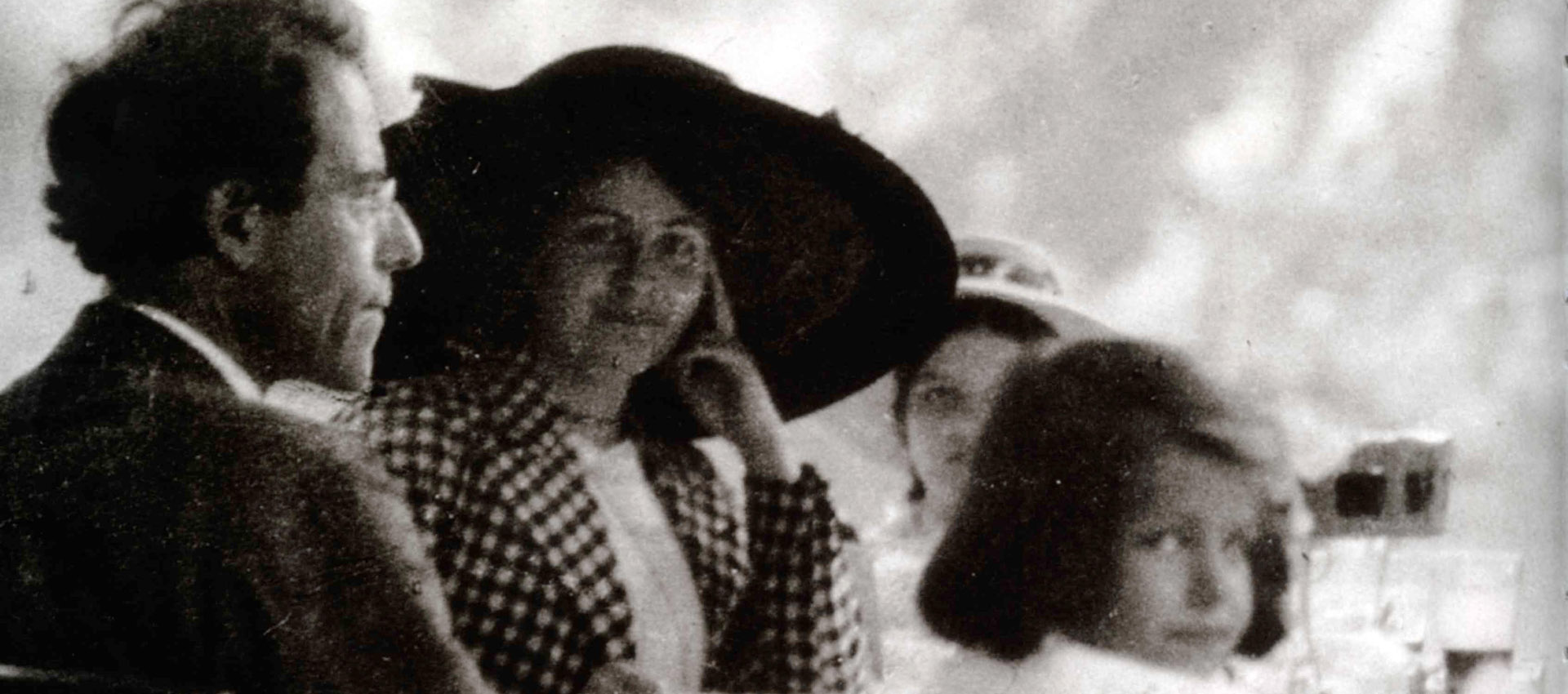
Gustav Mahler’s music is part of our Western identity today. But do we really know it? Do we know how it sounded when it was first performed, or even how it might have sounded in Mahler’s head when he first conceived it in Toblach? Challenging our expectations in this regard also means reconsidering our understanding of history, tradition and identity.
Mahler Academy Orchestra Tour 2026
Bolzano
04/09/2026Teatro Comunale
Toblach
05/09/2026Sala Mahler
Milan
09/09/2026Stresa Festival
London
11/09/2026BBC Proms
Cologne
12/09/2026Kölner Philharmonie
Amsterdam
14/09/2026Concertgebouw
Linz
16/09/2026Brucknerhaus
Vienna
17/09/2026Konzerthaus
Hamburg
18/09/2026Elbphilharmonie
Mahler Revisited

The Mahler Academy Orchestra’s originalklang project under the direction of Philipp von Steinaecker breathes new life into the performance practice of Mahler’s time. For this unique project, the students of the Mahler Academy meet 55 musicians from Europe’s top ensembles in Toblach, where Mahler wrote his last works.

To make the project possible, the “Euregio-Cultural Center Gustav Mahler Toblach-Dolomites” has built up a collection that meticulously reconstructs the instruments used by the Vienna Philharmonic Orchestra around 1900. Historical playing techniques of the fin de siècle are being relearned on these original instruments and the repertoire of this era is being approached in a series of chamber music concerts.

The Busoni-Mahler Foundation in close cooperation with the Foundation Euregio Kulturzentrum Toblach is responsible for the production of the originalklang project.


Research
The Mahler Academy works to ensure that the latest findings on historical performance practice in Vienna between 1890 and 1910 will be available for the work of the musicians. They collaborate closely with Prof. Dr. Clive Brown, who, as a leading specialist in the field of performance practice of romantic music, will accompany the research and rehearsal process of the orchestra and instruct the musicians in workshops and sectionals.
“Our concepts of beautiful and communicative performance are always evolving. Sometimes, along the way, we lose sight of sounds that are subtler and more apt for a realisation of the composer’s vision than those which have replaced them; sometimes, too, we lose contact with expressive practices that were only to be read between the lines, even in such detailed scores as Mahler’s. Rediscovering these sounds and practices, and using them creatively, can reinvest the music with a freshness and impact that has been lost through technological developments and anachronistic responses to Mahler’s notation.”
Prof. Dr. Clive Brown


Instruments
As part of its partnership with the Mahler Academy, the Foundation Euregio Kulturzentrum Toblach has begun building an instrument collection for the originalklang project, for which the instruments of the Vienna Court Opera Orchestra around 1910 are being meticulously reconstructed. The Foundation has purchased wind- and percussion-instruments and restored them or, in a few cases, had exact copies made. The string players use gut strings on their instruments and adapt their techniques to the conventions of the time.


Mahler Academy Orchestra
VIOLIN
Chupin, Afanasy *
Camerata Salzburg
Debus-Malm, Anna Maria*
Mahler Chamber Orchestra
Spadano, Massimo*
Orquesta Sinfónica de Galicia
Arzberger, Stefan
Leipziger Streichquartett
Baubin, Stephanie
Mahler Chamber Orchestra
Faganel, Žiga
Slovenian Philharmonic
Haffner, Léon
Mahler Academy Alumnus
Heubes, Christian
Mahler Chamber Orchestra
Kevorkova, Irina
Slovenian Philharmonic
Lee, Elissa
WDR-Symphonieorchester
Lörstad, Johannes
Stockholm Philharmonic
Michaluk, Maxime
Camerata Salzburg
McGowan, Leanne
Mahler Chamber Orchestra
Mondini, Claudio
Filarmonica della Scala
Radivo, Giovanni
Orchestre National de Lyon
Reina, Jesús
Utopia Orchestra
Ross, Michelle
Mahler Chamber Orchestra
Tesini, Giacomo
Lucerne Festival Orchestra
VIOLA
Jacobsen, Volker*
Artemis Quartett
De Jong, Marie-Louise
Dudok Quartet Amsterdam
Forni, Martina
Royal Concertgebouw Orchestra
Krimm, Anna
Beethovenorchester Bonn
Krüger, Carolin
Staatskapelle Halle
Saniter, Aline
NDR Elbphilharmonie Orchester
Winkler, Jörg
Maggio Musicale Fiorentino
CELLO
Geminiani, Gabriele*
Orchestra Mozart
Mandič Faganel, Alja
Slovenian Philharmonic
Pfiz, Konstantin
Utopia Orchestra
Rostamo, Johannes
Stockholm Philharmonic
Van Iersel, Johan
Royal Concertgebouw Orchestra
DOUBLE BASS
Wylezol, Andreas*
Staatskapelle Dresden
Devaere, Tom
B-Rock
Di Ronza, Roberto
Lucerne Festival Orchestra
Shaham, Naomi
Symphonieorchester des Bayerischen Rundfunks
FLUTE
Tonelli, Chiara*
Mahler Chamber Orchestra
Aceña Moreno, Diego
Staatsorchester Kassel
Schwaabe, Natalie
Symphonieorchester des Bayerischen Rundfunks
Varoch, Francisco
Mahler Chamber Orchestra
OBOE
Pidoux, Gabriel*
Ensemble Pygmalion
Sima, Sebastian*
Orchester der Wiener Staatsoper
Verdegem, Stefaan
AnimAeterna
CLARINET
Oberaigner, Robert*
Staatskapelle Dresden
Bewersdorff, Martin
Dortmunder Philharmoniker
Perschler, Sylvester
Wuppertaler Symphonieorchester, Concerto Köln
BASOON
Mandolesi, Giorgio*
Orchestre de Paris
Tutzer, Philipp*
Mozarteumorchester Salzburg
Barigione, Maurizio
Teatro Massimo Palermo
HORN
Dorfmayr, Peter*
Wiener Symphoniker
Paul, Katharina*
Mahler Academy
Gurdet, Florian
Klangvereinigung Wien
Lengyelvari, Peter
Wiener Symphoniker
Wetter, Laurids
Wiener Volksoper
TRUMPET
Jehl, Guillaume*
Berliner Philharmoniker
Gaisböck, Wolfgang
Camerata Salzburg
TROMBONE
Voglmayr, Walter*
Wiener Symphoniker
Gaiswinkler, Otmar
Wiener Symphoniker
TUBA
Winkler, Franz*
Wiener Symphoniker
TIMPANI
Kendell, Robert*
Constellation Orchestra
Rapp, Stefan*
Kammerphilharmonie Bremen
Sugishita, Rizumu
Camerata Salzburg
PERCUSSION
Miglioranza, Christian*
Mahler Chamber Orchestra
Sugishita, Rizumu
Camerata Salzburg
HARP
Gandino, Gaël*
Bayerisches Staatsorchester München
CELESTA
Sugishita, Rizumu*
Camerata Salzburg